5,895 metres above the savanna

The Complete Kilimanjaro Climbing Guide

Routes, the best time to climb, the real challenges, a day-by-day itinerary, training and cost: everything you need to choose a climb and send an enquiry.

Compare the routes
The mountain

Africa's highest peak, climbed on foot

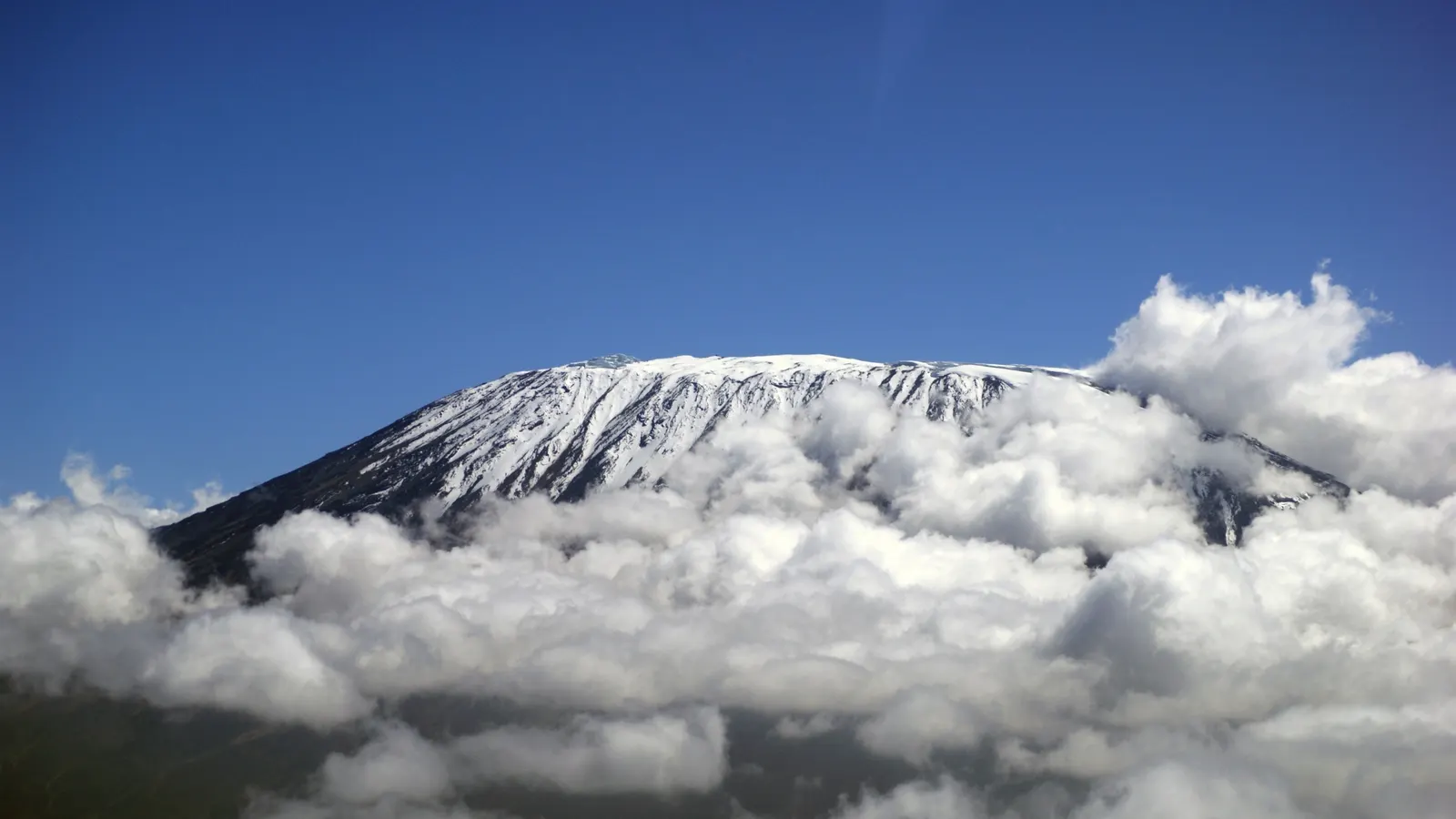
Mount Kilimanjaro rises alone from the plains of northern Tanzania, close to the town of Moshi and a short drive from Arusha. It is a dormant volcano made of three cones, Kibo, Mawenzi and Shira, and its highest point, Uhuru Peak on the rim of Kibo, stands at 5,895 metres. It is the tallest free-standing mountain in the world.

Unlike most mountains of its height, Kilimanjaro needs no ropes, ice axes or technical climbing skills. Climbers walk to the top on well-used trails, supported by guides, cooks and porters. What makes it hard is altitude, cold and the long final night, which is why route choice, pace and preparation matter so much.

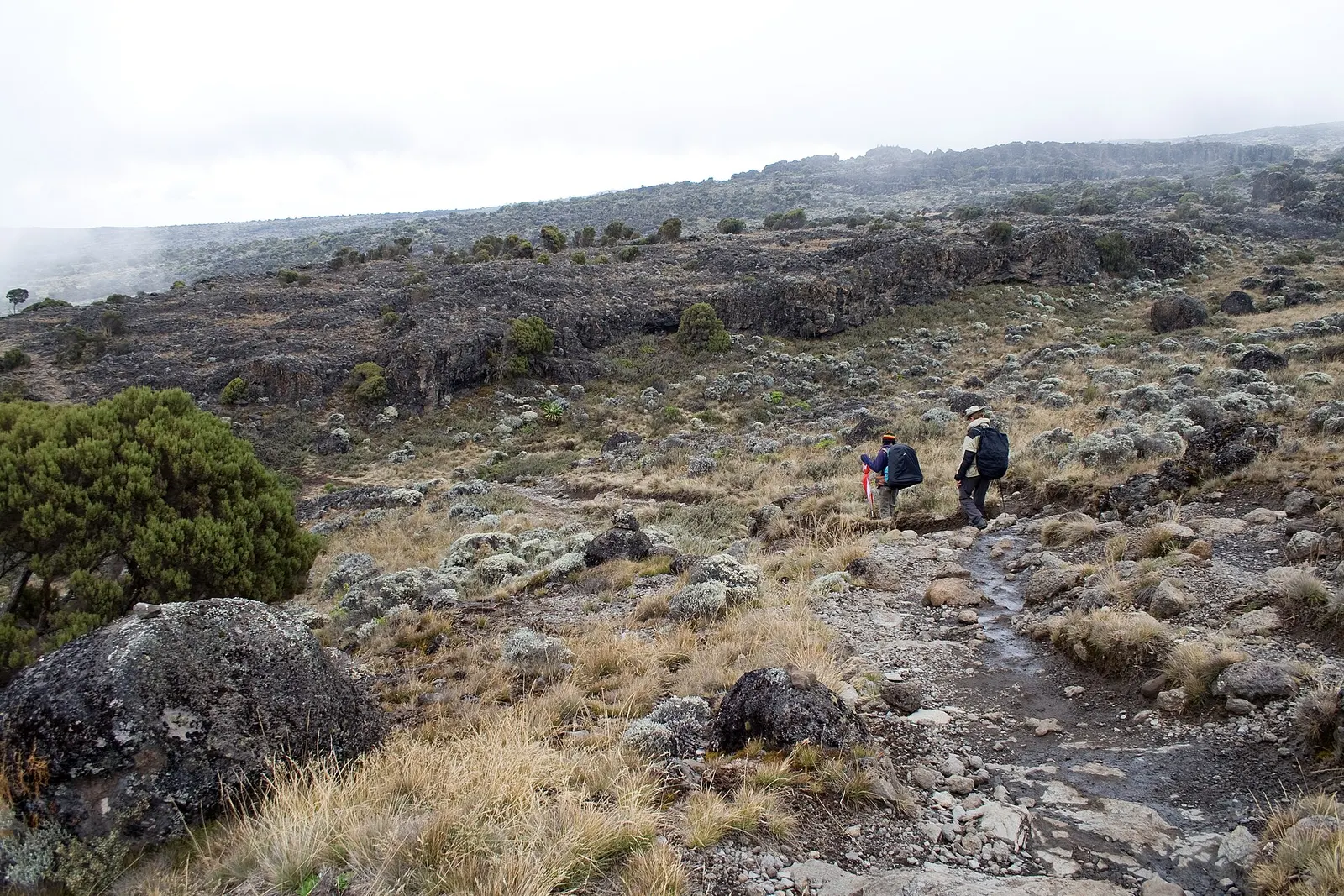
On the way up you pass through five climate zones, from farmland and rainforest to moorland, alpine desert and an icy summit. Climbs take from five to nine days, and most people choose between seven and nine because the extra days help the body adjust.

SummitUhuru Peak, 5,895 m
StatusHighest mountain in Africa
Typical climb6 to 9 days
Climate zones5, farmland to ice
Technical skillsNone needed
Main challengeAltitude and cold
Choosing your route

The Kilimanjaro Routes Compared

There are several established routes. They differ in length, scenery, crowds and how well they let your body adjust to the altitude.

The Shira Plateau on the Lemosho route, with moorland and open sky
West

Lemosho

7 to 8 days
Difficulty
Acclimatisation
Scenery
Quietness
TentsModerate to demandingQuiet at the start, busier after it joins the Machame line

Starts in the western rainforest, crosses the wide Shira Plateau and joins the Machame route near Lava Tower. The gradual gain in altitude and the extra days give your body time to adapt, which is why it is widely regarded as one of the best routes for acclimatisation and for views.

Best for: First-time climbers who want the best chance of reaching the summit, and anyone who values scenery and a gentler start.

Worth knowing: Needs seven to eight days and a longer drive to the trailhead, so it costs more than the shorter routes.

See our Lemosho climb From USD 5,890 per person
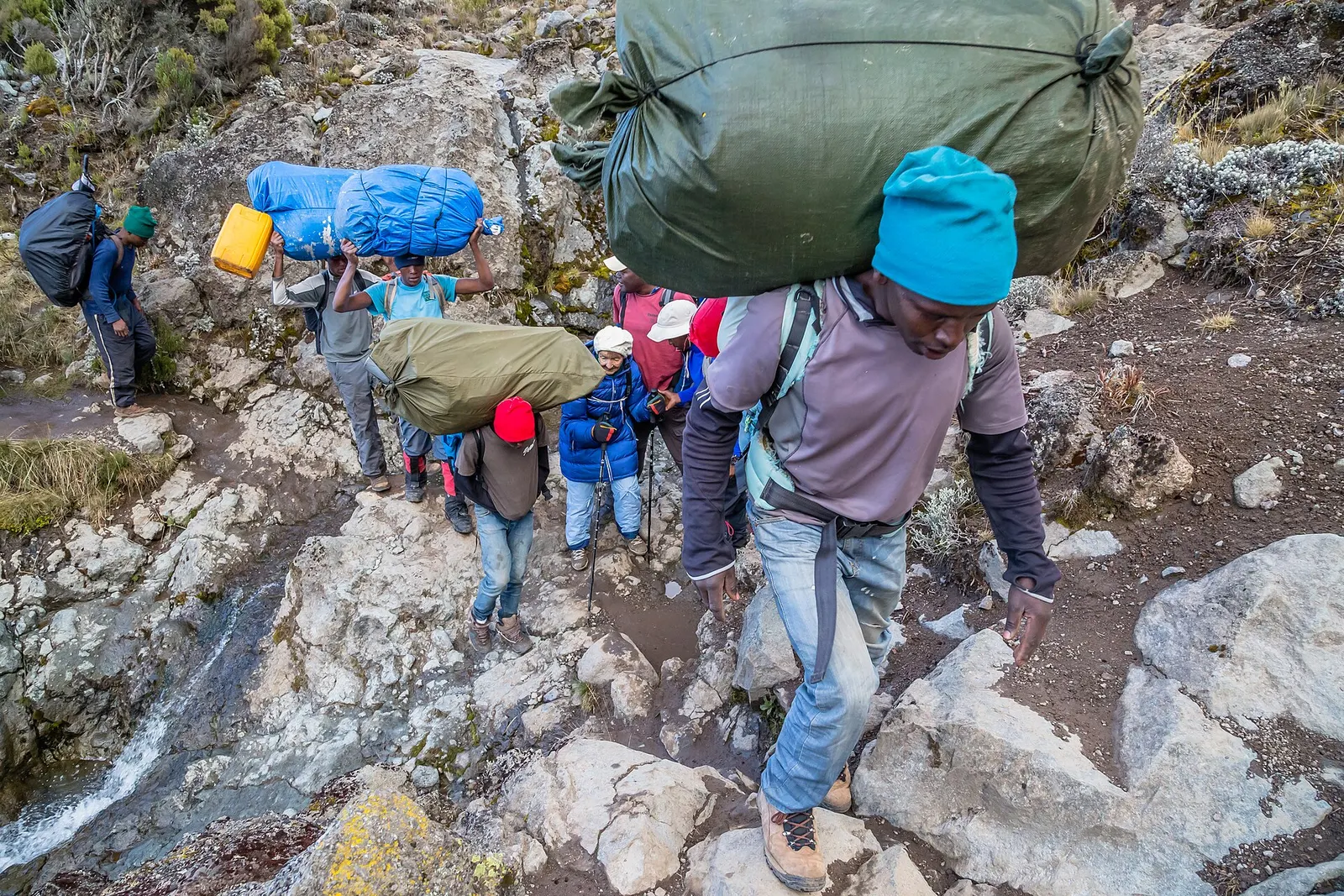
Porters carrying loads up the Barranco Wall on the Machame route
South

Machame

6 to 7 days
Difficulty
Acclimatisation
Scenery
Quietness
TentsModerate to demandingThe most popular route, so expect company on the trail

Often called the Whiskey route. It climbs through rainforest, crosses moorland, passes under the Lava Tower and goes beneath the Barranco Wall before the push to the summit. The "climb high, sleep low" profile helps acclimatisation, and the scenery changes every day.

Best for: Fit walkers who want a classic route with strong scenery and a good profile, with six or seven days available.

Worth knowing: The six-day version is quick for the altitude. The seven-day version gives a noticeably better margin.

See our Machame climb From USD 2,480 per person
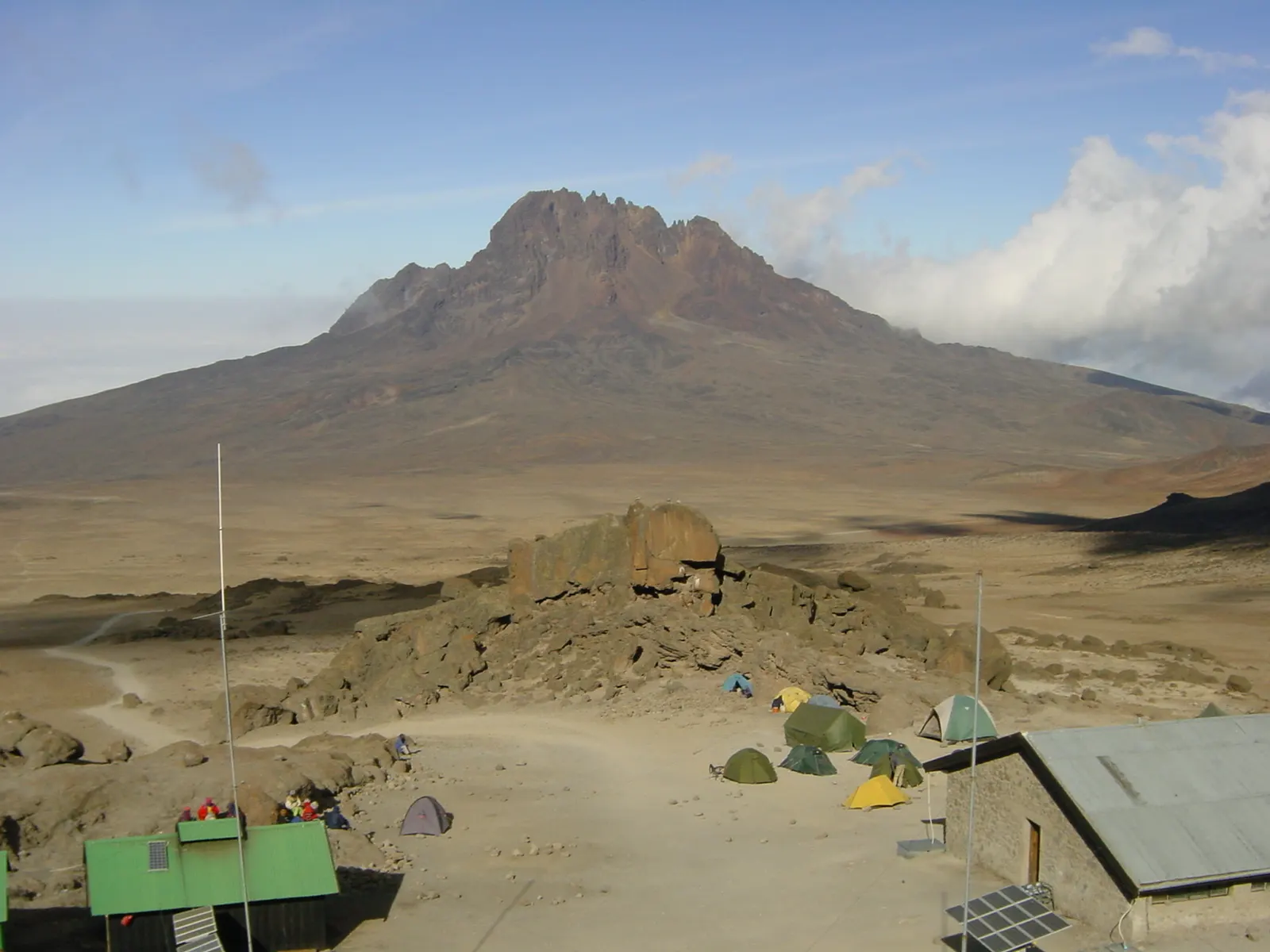
Mawenzi peak across the saddle from Kibo Hut, where the Rongai route arrives
North, near the Kenyan border

Rongai

6 to 7 days
Difficulty
Acclimatisation
Scenery
Quietness
TentsModerateQuieter than Machame

The only route to approach from the north. It is drier and gentler on the way up, with a wilder, quieter feel, and it descends by the Marangu route. It is a good option in the rainy months because the north side gets less rain.

Best for: People who prefer a quieter, steady climb, and those travelling in or near the rainy seasons.

Worth knowing: Less varied scenery than Lemosho or Machame, and the ascent is steadier, with less "climb high, sleep low" built in.

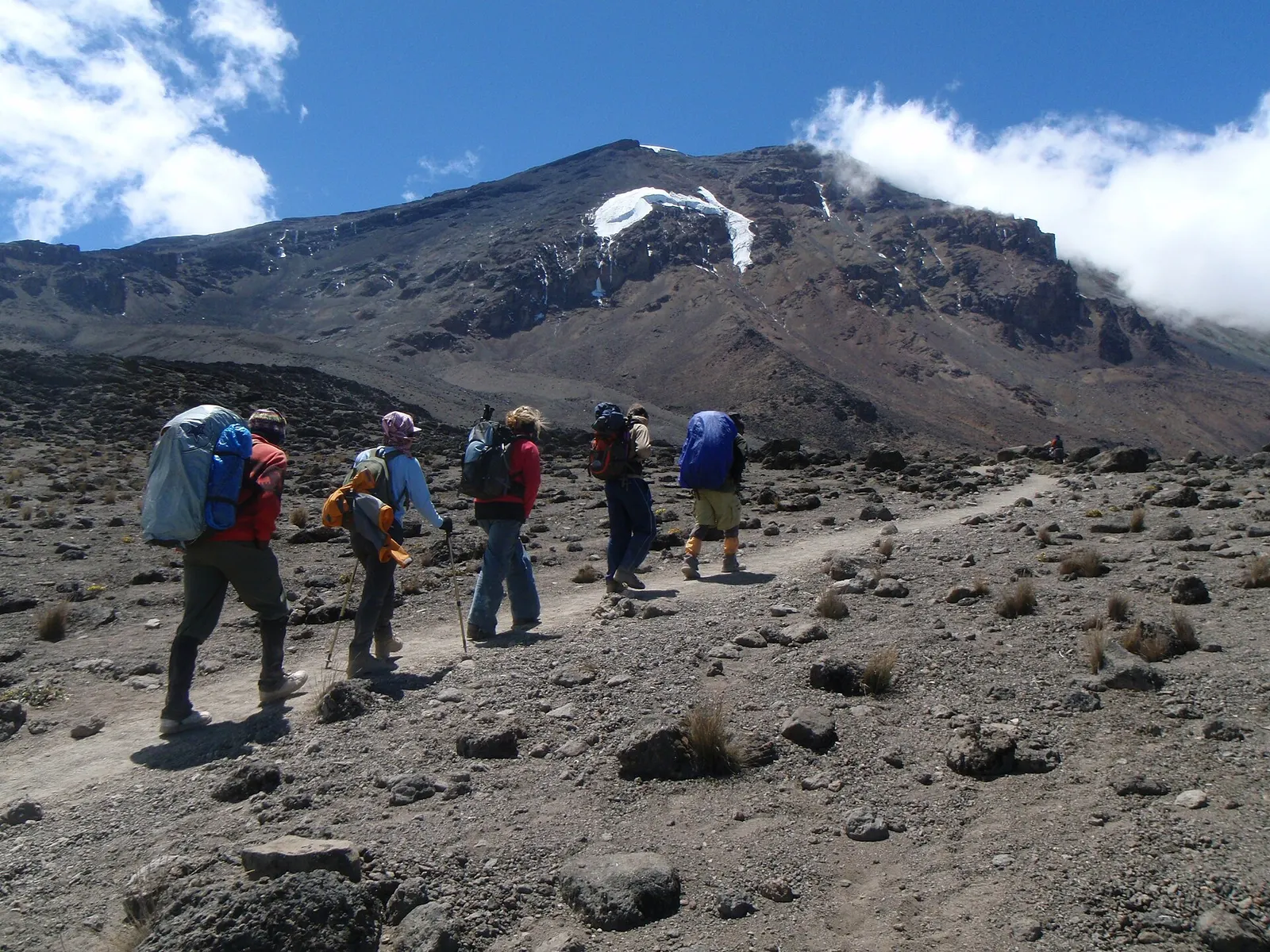
Trekkers climbing toward the Lava Tower with Kibo behind
West, then round the north

Northern Circuit

8 to 9 days
Difficulty
Acclimatisation
Scenery
Quietness
TentsModerate to demandingThe quietest route on the mountain

The longest route. It follows the Lemosho start, then curves around the quiet north side of Kibo before the summit push. The extra days give excellent acclimatisation, and you see parts of the mountain few climbers reach.

Best for: Climbers with time who want the best chance of summiting and the most solitude.

Worth knowing: Longer and more expensive. The extra days are in camp, so you need to be comfortable with a longer expedition.

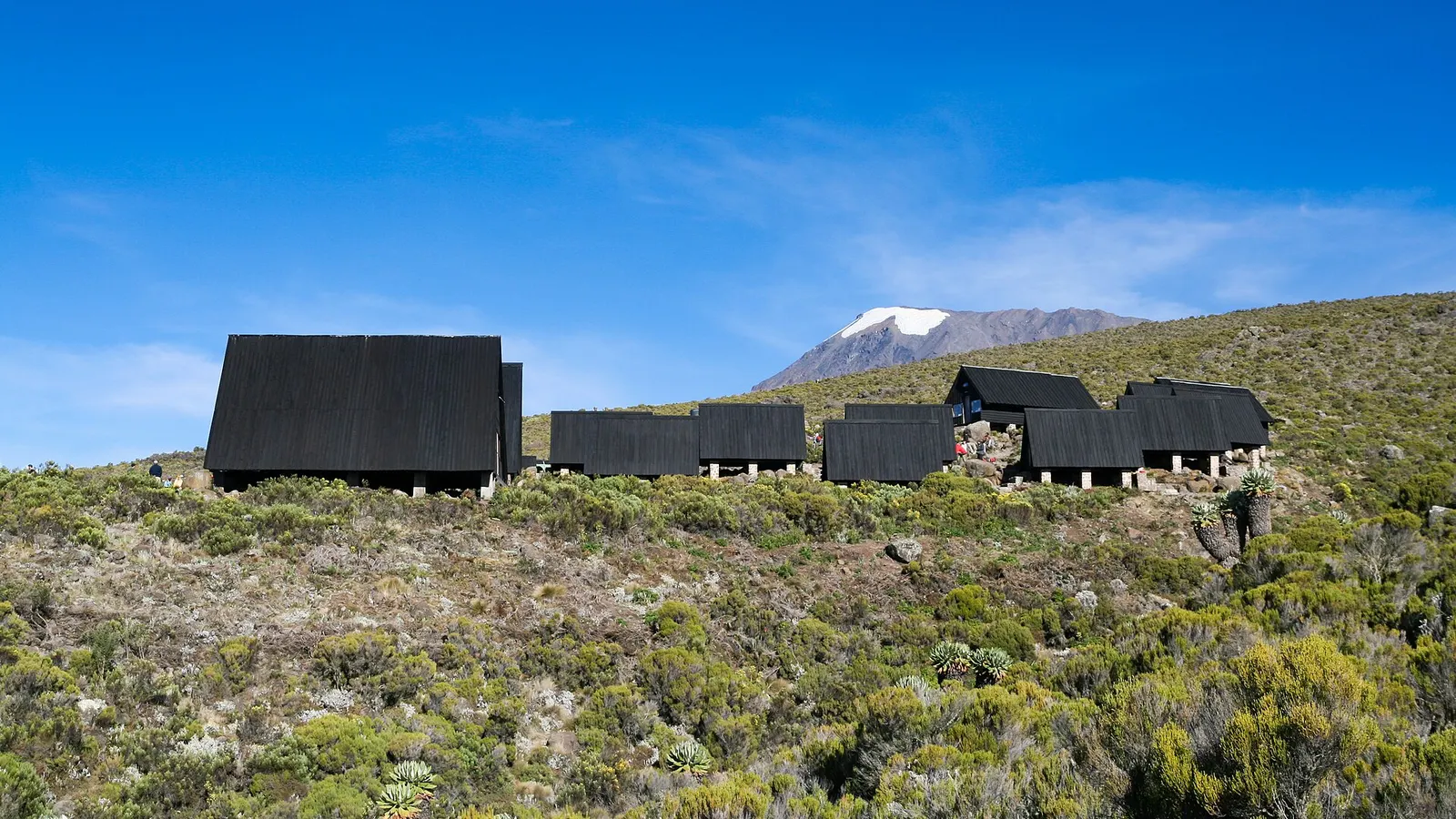
The Horombo huts on the Marangu route
Southeast

Marangu

5 to 6 days
Difficulty
Acclimatisation
Scenery
Quietness
Huts with bedsModerate on paper, but shortBusy

Known as the Coca-Cola route. It is the only route with sleeping huts instead of tents, which appeals to people who would rather not camp. It goes up and down by the same path.

Best for: Travellers who want a bed in a hut and are comfortable with a shorter, steeper profile.

Worth knowing: Fewer days means less time to acclimatise, and many guides advise adding an extra day. Hut places and crowds can be a factor in busy months.

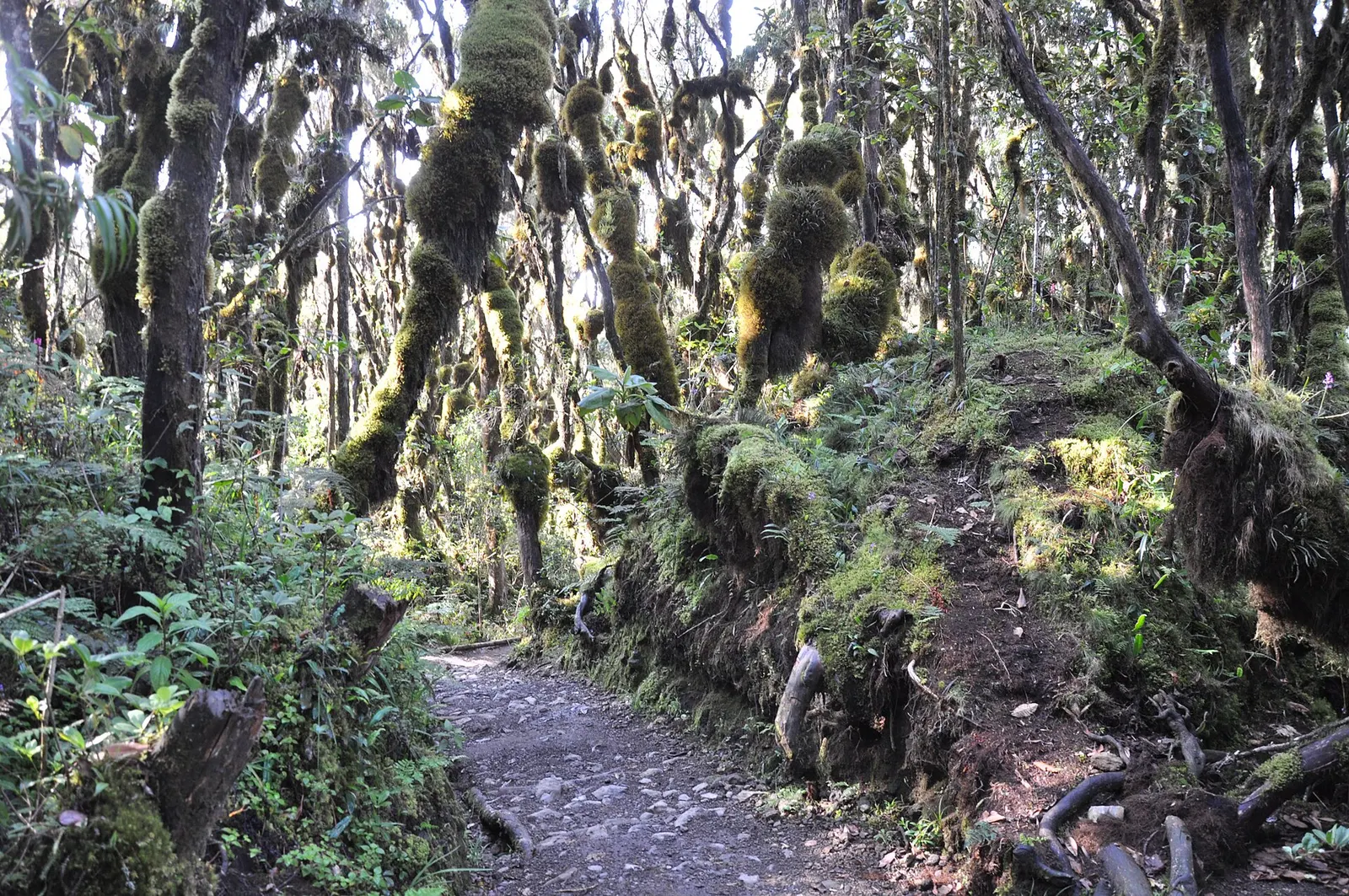
A moss-hung montane forest trail on the lower slopes of Kilimanjaro
South

Umbwe

5 to 6 days
Difficulty
Acclimatisation
Scenery
Quietness
TentsDemandingQuiet

The steepest and most direct route, gaining height quickly through forest. It is a serious climb with a strong sense of wilderness.

Best for: Experienced, very fit trekkers who already know how they respond to altitude.

Worth knowing: The quick gain in height makes it a poor choice for a first climb. Most guides recommend a longer route for most people.

Not sure which to pick? As a rule, choose the longest route your time and budget allow. Extra days are the most reliable way to improve your chances of reaching the summit comfortably.

When to go

The Best Time to Climb Kilimanjaro

You can climb all year, but weather varies a lot. There are two main dry seasons, and two rainy seasons to avoid if you can.

Main dry season

June to October

Long, stable, clear weather, which makes it the most popular window. Trails are busier, and nights are cold, especially in July and August.

Shorter dry season

Late December to early March

Warmer days with clear spells and fewer climbers. The summit can be very cold and sometimes snowy, and weather is a little less predictable than mid-year.

January

Good

Warm days, cold nights, drier spells. A good time, with fewer people than the peak months.

February

Very good

Clear, often the driest and sunniest of the early-year months. Cold on the summit, sometimes with snow.

March

Fair

Rains begin to build late in the month. Quieter trails but more weather risk.

April

Avoid

Long rains. Wet forest, poor visibility and slippery trails. Most people avoid it.

May

Avoid

Rains ease late in the month, but conditions are still unsettled.

June

Very good

The long dry season begins. Clear skies, firm trails and good views.

July

Very good

Dry and clear but cold, and one of the busiest months.

August

Very good

Dry and clear, busy, with cold nights and sharp mornings.

September

Very good

Dry, stable weather and warmer than mid-year. Many guides rate it highly.

October

Good

Mostly dry, though the short rains can start towards the end of the month.

November

Fair

Short rains. Wetter, with cloud and less reliable views.

December

Good

Often a dry break between the rains, and a popular holiday window. Check conditions closely.

Many climbers also time the summit night for a full moon, which lights the trail. Weather changes year to year, so treat these as a general guide. For the wider picture, see our best time to visit Tanzania guide.

Five worlds in one climb

The Climate Zones

  1. 1

    Cultivation and lower slopes

    Up to about 1,800 m

    Farmland, villages and coffee, warm and humid.

  2. 2

    Rainforest

    About 1,800 to 2,800 m

    Dense, wet and green, with mist and rain at any time of year. Monkeys and birds are common.

  3. 3

    Heath and moorland

    About 2,800 to 4,000 m

    Open heather and giant groundsels, big views and strong sun by day, cold at night.

  4. 4

    Alpine desert

    About 4,000 to 5,000 m

    Rocky, dry and windswept. Little life, big temperature swings and thin air.

  5. 5

    Arctic summit

    Above about 5,000 m

    Ice, snow and bitter cold with very little oxygen. Summit night happens here.

An honest look

The Real Challenges

Kilimanjaro is achievable for most fit people, but it is not easy. These are the things that matter.

Altitude

The summit is nearly 6,000 m, where each breath holds about half the oxygen it does at sea level. Altitude affects everyone differently, and fitness does not predict who will struggle. Headache, nausea and poor sleep are common. The cure is time and a slow pace, which is why longer routes work better and why guides say "pole pole", slowly slowly.

Cold

Summit night is the coldest part, with temperatures well below freezing and a strong wind chill. Layers, insulated gloves, a warm hat and good boots matter more than any single piece of equipment.

Summit night

The final ascent usually starts around midnight so you reach the crater rim at dawn. It is a long, cold walk uphill in the dark at your slowest pace, and the hardest few hours of the trip. Mentally, it helps to know what to expect.

Weather

Rain in the forest, strong sun on the moorland, wind and cold above. The mountain makes its own weather, so waterproofs and sun protection both matter, whatever the month.

Appetite and hydration

Altitude suppresses appetite, yet your body needs fuel and plenty of water. Eating and drinking even when you do not feel like it makes a real difference to how you feel.

Fitness and preparation

You do not need technical skill, but you do need to be able to walk for six to eight hours a day on consecutive days. Training with a loaded daypack on hills and stairs for a few months beforehand is the best preparation.

Safety comes before the summit

Guides check how each climber is doing every day. If symptoms of altitude illness do not improve, the safe answer is to go down, and that decision is respected without argument. Please see a doctor before you book, and make sure your insurance covers high-altitude trekking and evacuation. Nobody can guarantee a summit.

A typical climb

Day by Day on the Lemosho Route

A sample eight-day itinerary. Heights are approximate, and the exact schedule varies by operator and group.

  1. Day 1

    Londorossi Gate to Mti Mkubwa camp

    About 2,100 m to 2,800 m

    Registration at the gate, a drive to the trailhead and a first walk through the western rainforest. A short day to settle in.

  2. Day 2

    Forest to Shira 1 camp

    About 2,800 m to 3,500 m

    The forest opens onto moorland and the wide Shira Plateau, with the first big views of Kibo.

  3. Day 3

    Shira 1 to Shira 2 camp

    About 3,500 m to 3,850 m

    A gentle walk across the plateau. The short distance gives the body a chance to adapt before the higher days.

  4. Day 4

    Lava Tower to Barranco camp

    Up to about 4,600 m, sleeping at about 3,900 m

    You climb high to Lava Tower, then descend to sleep lower at Barranco. This is the classic "climb high, sleep low" day.

  5. Day 5

    Barranco Wall to Karanga camp

    About 3,900 m to 4,000 m

    The Barranco Wall is a steep scramble but not technical. Then a rolling walk across the valleys to Karanga.

  6. Day 6

    Karanga to Barafu camp

    About 4,000 m to 4,650 m

    A short climb to base camp for the summit push. Early dinner, rest and final kit checks.

  7. Day 7

    Summit day: Uhuru Peak, then Mweka camp

    4,650 m to 5,895 m, then down to about 3,100 m

    Start around midnight, reach Stella Point and Uhuru Peak around sunrise, then descend a long way to Mweka camp.

  8. Day 8

    Mweka camp to Mweka Gate

    About 3,100 m to 1,650 m

    A walk down through the forest to the gate, where summit certificates are issued, and then back to your hotel.

Getting ready

Fitness and Training

  • Start building fitness three to four months before the climb, and earlier if you do not exercise regularly.
  • Walk hills with a loaded daypack, building up to several hours on consecutive days.
  • Add stairs, cycling or running for stamina, and strength work for the legs and core.
  • Break in your boots on long walks well before the trip, and train in the socks and layers you will wear.
  • Practise good sleep, steady eating and drinking plenty of water, because these are part of the climb too.
  • See a doctor before booking, particularly if you have a heart, lung or blood-pressure condition or any other medical concern.
What to bring

Gear and Packing

You will pass from tropical rain to arctic cold, so layers are everything: a base layer, a warm mid layer, an insulated jacket and a waterproof shell, plus a warm hat, gloves, sun protection, broken-in boots, a good sleeping bag and a headlamp.

Heavier items such as sleeping bags and jackets can usually be rented rather than bought, which is worth asking about when you enquire.

Read the full packing guide
What it costs

Cost, and What a Quote Should Include

A Kilimanjaro price is made up of many parts. Understanding them helps you compare quotes honestly.

Route length

Longer routes mean more days of crew, food and fees, so they cost more, though they usually give you a better chance of reaching the summit.

Group size

Fixed costs such as guides, cooks and transport are shared. A smaller group costs more per person, but it is quieter and more flexible.

Park fees

These are set by the park authority, are a large part of the price, and can change. Your quote should show what is included.

Crew welfare

Fair wages, proper food and equipment for the crew are part of an honest price. A very low quote often means something is being cut.

Extras

Hotel nights, a safari afterwards, equipment hire, private versus shared tent and insurance all change the total.

Usually included

  • Park and conservation fees, camping or hut fees, and rescue fees as set by the park authority
  • Licensed mountain guides, assistant guides, cooks and porters
  • Camping equipment: tents, sleeping mats, a mess tent, tables and chairs
  • All meals and safe drinking water on the mountain
  • Airport and hotel transfers and transport to the trailhead
  • Hotel nights before and after the climb, on the packages that include them

Usually not included

  • International flights
  • Tanzania visa
  • Travel and medical insurance, including evacuation cover
  • Personal gear, or rental items such as sleeping bags and jackets
  • Tips for the guides, cook and porters
  • Personal expenses, drinks and optional extras

Our Kilimanjaro climbs

12 days

Lemosho Summit, Then the Plains

From USD 5,890 per person
View climb
7 days

Machame, the Long Way Up

From USD 2,480 per person
View climb

Prices are guide figures per person and depend on group size, season and the details above. Ask us for a quote for your dates.

Climbing responsibly

The crew who make the climb possible

Every climb depends on guides, cooks and porters. Ask any operator how they pay and look after their crew, whether loads are weighed, and what food, shelter and clothing the crew receive. We are committed to following the Kilimanjaro Porters Assistance Project (KPAP) guidelines on every climb. Fair treatment of the crew is part of an honest price, and a big reason to avoid the cheapest quote.

Climbers' questions

Kilimanjaro FAQs

Straight answers to the questions people ask before they book.

More questions? See the general FAQ or message us directly.

Ready when you are

Ask about your Kilimanjaro climb

Tell us your dates, your group and the route you like, and we will reply with a clear plan. You do not need to have decided everything. A few details are enough to start.

  1. 1Send an enquiry with your dates and group size
  2. 2We recommend a route and send a clear quote
  3. 3You confirm, and we handle the rest
Message on WhatsApp