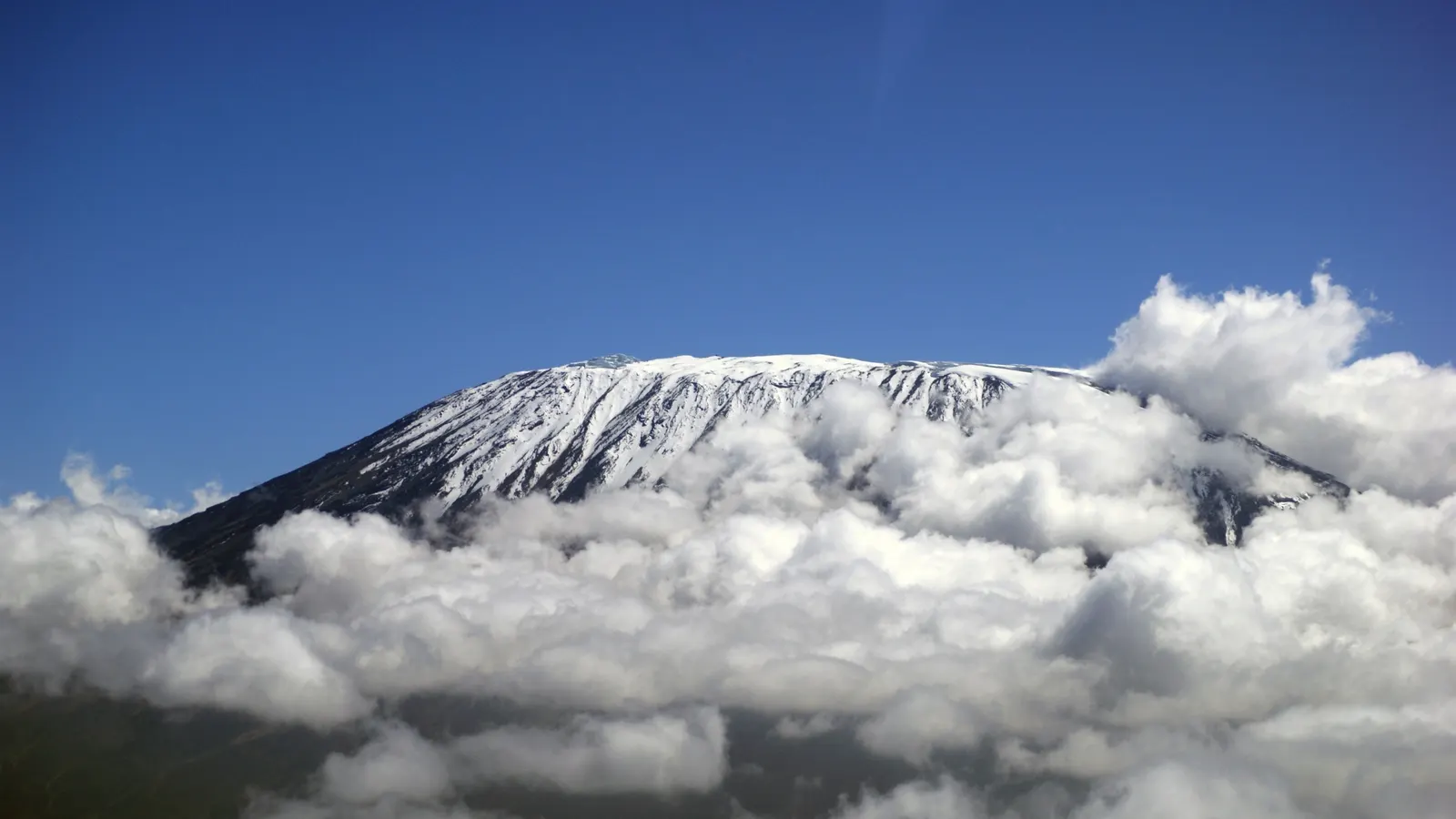
Mount Kilimanjaro is the highest free-standing mountain in the world, rising to 5,895 metres at Uhuru Peak in northern Tanzania. It is a non-technical climb, which means no ropes, ice axes or climbing experience are needed, and that accessibility is exactly why so many first-time trekkers put it on their list. It also hides the real difficulty. The challenge of Kilimanjaro is not steepness or rock, it is altitude, and understanding how altitude works matters more than raw strength.
This guide explains in plain terms what high altitude does to the body, how acclimatisation works, and why the Lemosho route is a popular choice for pacing it. It is general information and not medical advice. Every body responds differently, so please talk to your own doctor, ideally a travel medicine clinic, before you commit to a climb.
What altitude does to the body
The air at the top of Kilimanjaro contains the same share of oxygen as the air at sea level, roughly 21 percent. What changes is air pressure. At the summit the barometric pressure is about half of what it is at the coast, so each breath delivers far fewer oxygen molecules to your lungs. The body senses this drop and responds: breathing becomes faster and deeper, the heart beats harder, and over days the body begins to make more red blood cells to carry oxygen.
This process is called acclimatisation, and it cannot be rushed. It happens on its own timetable, which is why a fit person who climbs too quickly can feel worse than a modestly fit person who climbs slowly. Fitness helps with the walking, but it does not speed up the way your blood and breathing adapt to thin air. Two climbers of the same age and strength can react very differently, and your response on one trip is not a reliable guide to the next.
Most trekkers start to notice altitude effects above about 2,500 metres. A mild headache, a slightly raised resting pulse, shortness of breath on gentle slopes, vivid dreams and light, broken sleep are all common. These are normal signals that your body is working. The skill of the climb lies in telling normal effects from warning signs, and in giving the body enough time to catch up.
Acute mountain sickness, HACE and HAPE
Acute mountain sickness, often shortened to AMS, is the most common altitude illness. Typical symptoms include a persistent headache, nausea, loss of appetite, dizziness, unusual tiredness and poor sleep. Mild AMS often settles if you stop ascending, rest, drink fluids and let the body adjust. If symptoms worsen while you keep climbing, the situation changes, and the safe response is to descend rather than push on.
Two rarer but serious conditions can develop from AMS. High altitude cerebral oedema, known as HACE, involves swelling of the brain. Warning signs include confusion, loss of coordination, difficulty walking in a straight line and unusual drowsiness or irritability. High altitude pulmonary oedema, or HAPE, involves fluid in the lungs. It can show up as breathlessness at rest, a persistent cough, a rattling chest and extreme fatigue. Both can become life threatening, and the main treatment in each case is prompt descent and medical care.
Guides on Kilimanjaro are trained to look for these signs, and they check on trekkers each morning and evening. It helps enormously if you are honest about how you feel. Hiding a headache to stay on schedule is the single most unhelpful thing a climber can do. Altitude illness is not a sign of weakness, and it does not predict who is tough and who is not.
Climb high, sleep low and pole pole
Two principles shape almost every sensible Kilimanjaro itinerary. The first is the old mountaineering rule of climb high, sleep low. During the day you walk up to a higher elevation, which gives the body a stimulus to adapt, and then you descend to sleep at a lower camp, where rest is easier and recovery is better. The Lava Tower day on several routes is a classic example, and it is one reason those routes are well regarded for acclimatisation.
The second principle is pole pole, the Swahili phrase meaning slowly, slowly. You will hear it from guides from the first morning. Walking at a very slow pace feels almost silly at the start, especially when you are fresh and the forest is cool. But a slow pace keeps your heart rate low, conserves energy, lets you breathe through your nose and talk in sentences, and stops you burning through reserves you will need on summit night.
A useful test is that you should be able to hold a conversation while walking. If you are gasping, you are going too fast for the elevation. Climbers who overtake the group early often pay for it later, and the quiet confidence of a steady rhythm tends to look unimpressive on day one and very sensible by day five.
Why longer itineraries tend to help
Kilimanjaro is climbed on itineraries from about five days to nine or more, and in general the longer schedules give better odds of reaching the top. The reason is simple: more days at moderate altitude means more time for acclimatisation, and gentler daily gains in elevation mean less stress on the body. A short, steep ascent gives the body little time to adapt, while a longer trek allows a gradual build.
This is a general pattern, not a promise. Weather, health, sleep, nutrition and sheer luck all play a part, and no operator can guarantee a summit. But if you are deciding between a shorter and a longer route, it is sensible to think of the extra days as an investment in comfort and safety rather than as a luxury. A seven or eight day trek also leaves room for a rest day or a slower pace if someone in the group needs it.
Many travellers also combine a climb with a safari in Tanzania, usually placing the safari after the mountain so that the climb is not affected by long travel days. Others finish the trek and then relax on the coast or Zanzibar. Whatever the plan, giving the mountain generous time is usually the wisest decision.
The Lemosho route day by day
The Lemosho route begins on the western side of Kilimanjaro National Park. Trekkers are driven from Arusha or Moshi to Londorossi Gate, where permits are checked and registration is completed, and then continue to the Lemosho trailhead. The route has a reputation for scenery and quiet trails, and for a profile that suits acclimatisation. Typical itineraries run seven or eight days, though the exact schedule varies by operator.
The first day climbs through montane rainforest to Mti Mkubwa camp at roughly 2,800 metres, and the second crosses into moorland on the way to Shira 1 camp at around 3,500 metres. The Shira Plateau, a broad high caldera floor, sits beneath the peak and gives wide views. Shira 2 camp follows at about 3,850 metres. Many itineraries then walk up to Lava Tower at roughly 4,600 metres for lunch before dropping to Barranco camp at around 3,900 metres, a perfect example of climbing high and sleeping low.
From Barranco the trail climbs the Barranco Wall, a steep scramble that is more fun than frightening for most people, and continues to Karanga camp at about 4,000 metres. Next comes Barafu camp at roughly 4,600 metres, the base for the summit attempt. On summit night trekkers set off around midnight, reach Stella Point on the crater rim, and continue to Uhuru Peak at 5,895 metres. After a short rest on top they descend to Barafu, and then continue down to Mweka camp, with the final stretch to Mweka Gate on the following morning.
Other routes include Machame, Rongai, Marangu, Umbwe and the Northern Circuit, each with its own character. Lemosho and the Northern Circuit are often described as strong choices for acclimatisation because they spend more days on the mountain. Your decision should reflect your schedule, budget, comfort with camping and how much time you can set aside.
The five climate zones
One of the delights of Kilimanjaro is that you pass through five distinct climate zones, which is like travelling from the equator to the polar regions in a matter of days. The lowest is the cultivation zone, up to roughly 1,800 metres, where farms, banana groves and coffee plots surround the base of the mountain. Above that lies the rainforest zone, running to about 2,800 metres, with towering trees, ferns, mist, monkeys and birds. Expect humidity, mud and the possibility of rain at any time of year.
The heath and moorland zone follows, up to around 4,000 metres, with giant heather, lobelias and the famous giant groundsel plants. The air is thinner here, the sun is stronger and nights are noticeably cold. Above that is the alpine desert, a stark, dusty landscape of rock and sparse vegetation where daytime temperatures swing wildly and little can grow. The final zone is the arctic summit, above roughly 5,000 metres, with glaciers, ice and freezing temperatures.
These zones matter for altitude because each brings a different challenge. In the forest the focus is on staying dry and warm. In the moorland and alpine desert the focus is on sun, wind, hydration and pace. At the top it is about managing cold, tiredness and decision making when your brain is short of oxygen.
Hydration, food, sleep and monitoring
Good habits support acclimatisation. Most guides recommend drinking steadily through the day, often around three to four litres, and keeping urine pale. Warm drinks such as tea and soup are welcome in the cold. Food matters just as much: appetite drops at altitude, but carbohydrates provide the fuel your body uses most efficiently, so eating even when you do not feel like it is wise. Snacks you enjoy are worth bringing.
Sleep is often fragmented above 3,000 metres, partly because breathing patterns change at night. A warm sleeping bag, a comfortable mat and an early night help. Avoid alcohol and sleeping tablets unless your doctor advises otherwise, as they can affect breathing. Keep a record of how you feel each day, because patterns are easier to spot in writing.
Many guides use a pulse oximeter to check blood oxygen saturation and heart rate each day. Readings fall as altitude rises, and a normal reading at 4,000 metres is lower than at sea level, so the number is read alongside symptoms and how you look and behave, never in isolation. Questions about preventive medication, including drugs such as Diamox, whose generic name is acetazolamide, belong with your doctor. Do not decide on your own, and do not take anything you have not discussed with a medical professional.
Fitness and mental preparation
You do not need to be an athlete, but you do need to be properly fit. The best way to prepare for Kilimanjaro is to build endurance over several months with long walks, hill work and stair climbing, ideally carrying the daypack you will use on the mountain. Cardio fitness through running, cycling or swimming helps, and strong legs make the descent far easier on your knees. Aim for hikes of six to eight hours back to back on a weekend if you can.
Break in your hiking boots well before you travel, and use your trekking poles in training. Practise layering so you know how you feel when you add and remove clothing. If you can train at altitude, that is useful, but most people cannot, and sensible training at home is still valuable. Speak to your doctor if you have a heart or lung condition, high blood pressure, diabetes or any other medical issue, and tell your guides before the climb.
Mental preparation counts for a great deal. Days of trekking, sleeping in a tent, cold mornings and the long night of the summit push can feel hard when you are tired. Accept in advance that there will be low moments, and that low moments usually pass. Many climbers find it helps to break the trek into small goals: reach the next camp, finish lunch, take the next fifty steps.
Summit night and the descent
Summit night is the toughest part of any Kilimanjaro climb. After a short rest in the afternoon you wake near midnight, dress in all your warm layers and start climbing in the dark by headlamp. The slope is steep, the trail zigzags, and temperatures can drop well below freezing, with wind making it feel colder. It usually takes six to eight hours to reach the crater rim, and the pace is often slower than you would ever believe necessary. That is exactly the point.
Stella Point marks the crater rim, and from there Uhuru Peak is a further walk along the rim, often in sunrise light, with views over glaciers and the plains of Tanzania below. Many people feel emotional at the top. Do not stay long, as the altitude is demanding, and the descent is where your focus matters. Your guides may decide to turn the group around at any point if conditions or health demand it, and that decision should be respected. A summit is never worth a risk.
The descent is long, usually dropping from the summit to Barafu for a rest and then on to a lower camp the same day. Poles help your knees, and gaiters keep out dust. The air thickens quickly as you go down, and most people feel much better within hours. A final morning walk through the forest to the gate ends with a certificate for those who reached the top, and a well earned shower and meal.
Travel insurance deserves attention before you book. Check that your policy explicitly covers trekking to 6,000 metres, helicopter evacuation and emergency medical treatment, and read the terms carefully. In an emergency, guides can arrange descent and transfer, and rescue services exist on the mountain, but evacuation is costly without cover. Always follow park rules and the guidance of your guides, and treat the mountain with respect.
Planning your trip
If you would like to climb Kilimanjaro, the best first step is a conversation about your goals, your schedule and your experience. Choosing a route, deciding how many days to take and planning travel to Arusha are all easier with advice from people who know the mountain. The Expedition Tours is happy to talk through the options with you and help you plan an itinerary that suits your pace and your plans. You are welcome to get in touch when you are ready to begin.
About The Expedition Tours
The Expedition Tours plans safaris, Kilimanjaro climbs and Zanzibar extensions from Arusha, Tanzania, built around each traveller.
See our routes →More Field Dispatches
All field notes →
Walking Safaris in Tarangire: Reading Tracks and Signs on Foot
Plan a guided walking safari around Tarangire: how to read tracks, dung and bird alarm calls, what to wear, the best season and the rules that keep you safe.
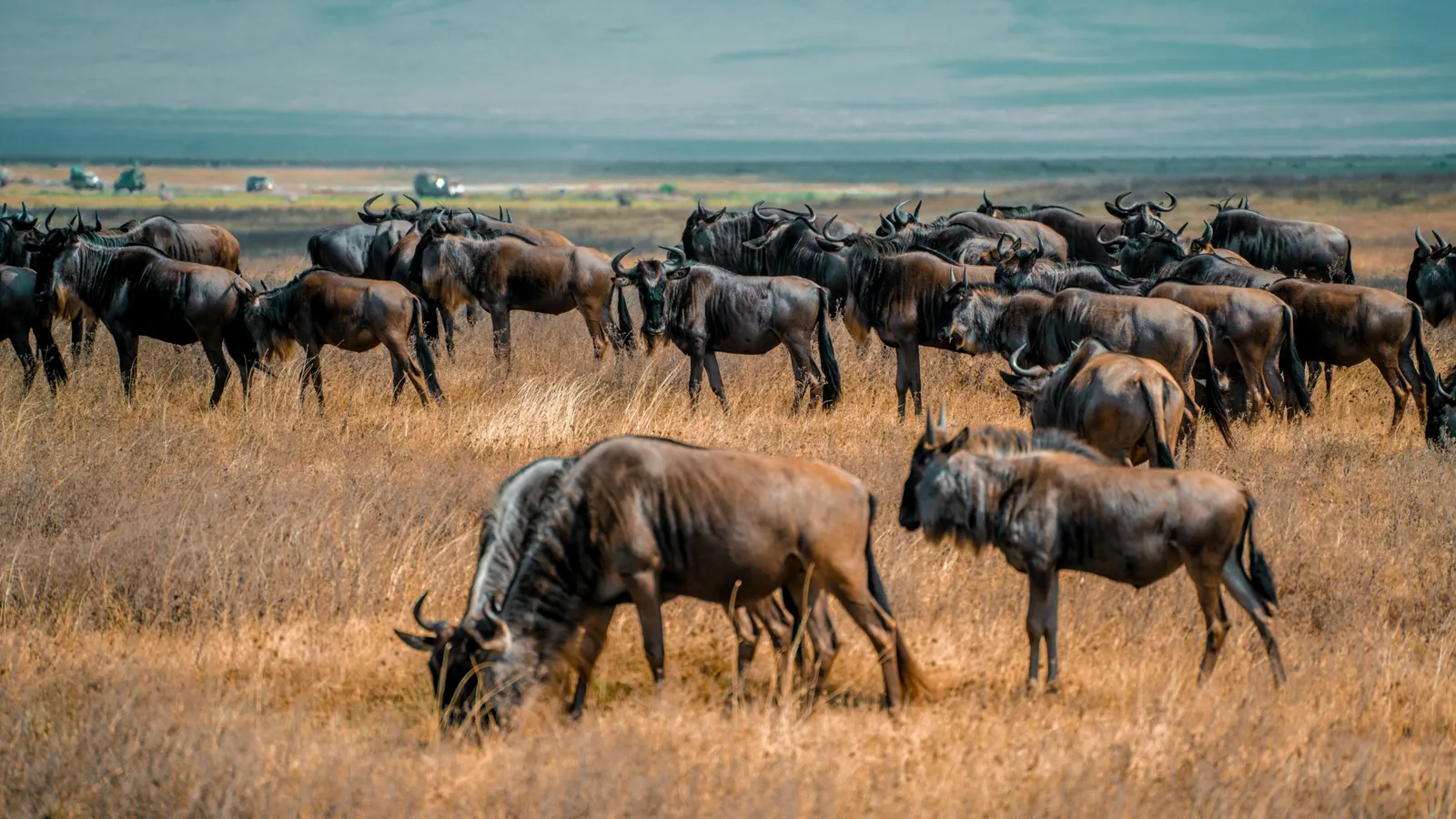
Ndutu in February: What to Expect During the Calving Season
Every year, usually from late January to March, the wildebeest gather on the southern plains to calve. What to expect around Ndutu in February, and how to plan for it.