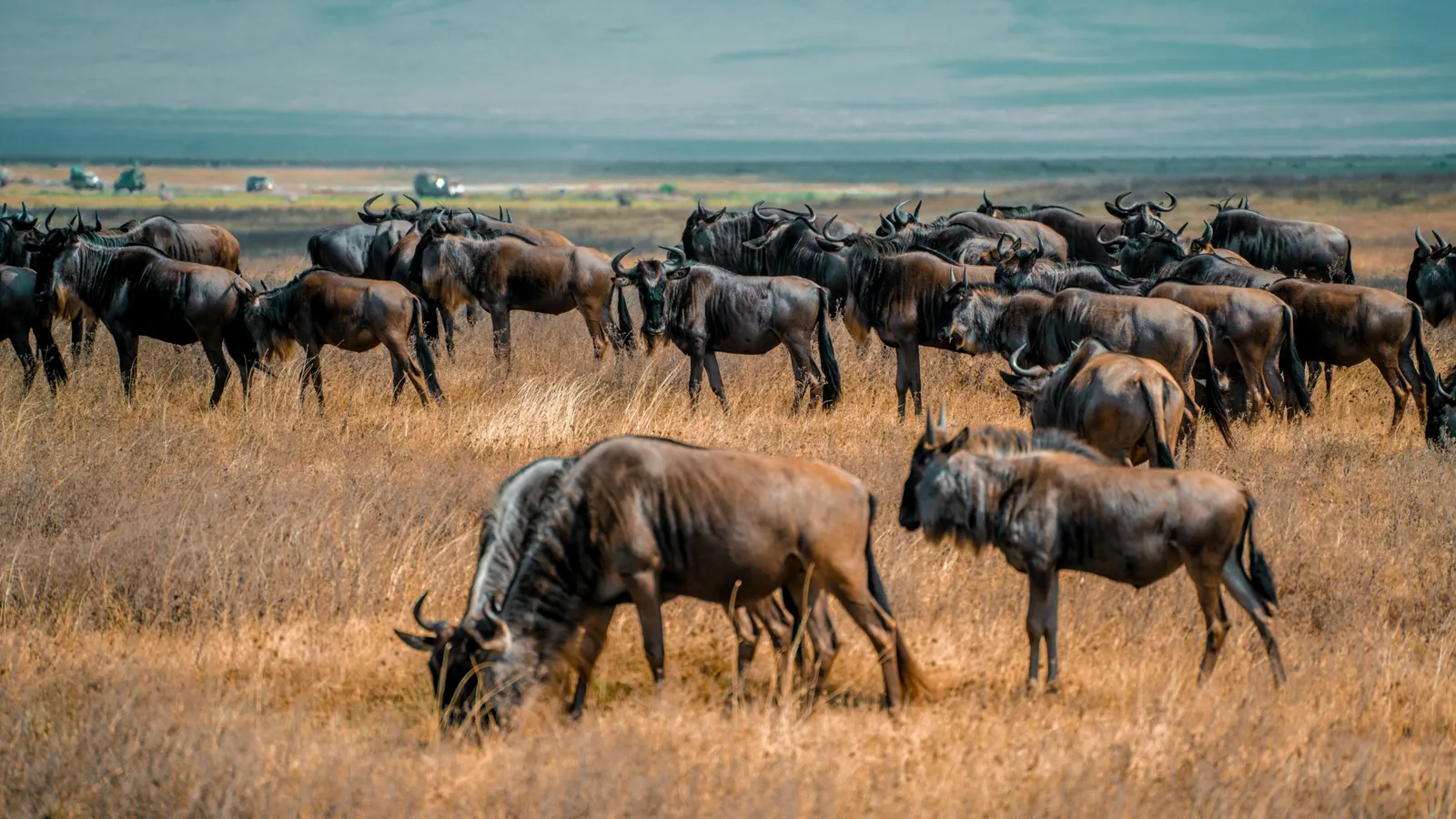
Every year, usually between late January and March, a large part of the Serengeti wildebeest herd gathers on the southern plains of Tanzania to give birth. This is the calving season, and the area around Ndutu is where most travellers choose to watch it. The short grass is green, the lakes hold water, and the plains fill with newborn calves, zebra foals and gazelle fawns, followed closely by the predators that depend on them.
This guide explains what to expect from a February safari in the southern Serengeti and the Ndutu region: why the herds go there, how the landscape looks, how to find the animals, how to behave on a game drive, and where the season falls short of the brochure picture. Nothing about the Great Migration is fixed, so treat every date here as a pattern rather than a promise.
Why the herds go south
The southern Serengeti plains sit on volcanic ash from the nearby highlands of the Ngorongoro Conservation Area. The soil is rich in minerals, especially calcium and phosphorus, and the short grass that grows on it is highly nutritious. Lactating females need exactly that, which is the main reason the wildebeest migration returns to the short grass plains each year when the short rains of November and December have turned the country green.
The open ground also helps. On a flat plain a mother can see danger coming from a long way off, and a herd of hundreds of thousands offers safety in numbers. Calving is synchronised, so that most calves arrive within a few weeks of each other. Predators cannot eat them all, and many calves are on their feet within minutes of birth, able to run with the herd soon after.
You will often hear that around 8,000 calves can be born on peak days. That is an often quoted figure rather than a counted one, but it gives a fair sense of the scale. Births are spread over several weeks, with the busiest period commonly falling in February, though it can start earlier or finish later depending on the rains.
Where Ndutu fits in the landscape
Ndutu is not a single place so much as a region on the southern edge of the Serengeti National Park, spilling into the Ngorongoro Conservation Area. It is a mosaic. Open short grass plains stretch to the horizon in one direction, while patches of acacia woodland, riverine bush and scattered marshy ground lie in another. That variety is why the area holds such a wide range of wildlife.
Two alkaline lakes give the region its character. Lake Ndutu and Lake Masek are shallow, seasonal and often fringed with flamingos, pelicans and other water birds when conditions suit. Their level changes from year to year, and in a dry spell they can shrink to a pale crust. The acacia woodland around them offers shade, and it is where a leopard can sometimes be found resting in the branches, and where elephant, giraffe and other browsers feed.
In February the plains are usually green and soft after the short rains, with a sky that can turn from bright blue to dramatic storm cloud within an hour. The light is good for wildlife photography, the air is clearer than in the dry months, and the views across the plains can feel very wide indeed. The colours shift too: bright green grass, dark herds, and bare black soil where thousands of hooves have worn the surface down.
The predators that follow the calves
Where there are newborn animals, there are hunters. Lion prides take up position near the herds, and the large number of young, inexperienced animals makes hunting easier than at other times of year. Cheetah are often seen on the open plains, using termite mounds or low rises as lookouts before they sprint after gazelle fawns and young wildebeest.
Spotted hyena are active and efficient in this season, working in groups and often hunting at dusk and through the night. Their dens and the way they test a herd are fascinating to watch if you stay quiet and patient. Black-backed jackal trot along the edges of the herds looking for afterbirth or abandoned young, while vultures wheel overhead and drop to a carcass within minutes.
Leopard are shy and solitary and not seen as reliably, but the woodland near the lakes gives you a fair chance of finding one with luck and a sharp-eyed guide. The point is that a kill is never guaranteed on any single drive. Some mornings the plains are calm and the predators sleep. Other mornings the action is constant. Wildlife does not follow a timetable, and an honest safari plan accepts that.
Finding the herds
The herds are not static. Wildebeest follow the best grazing, and they move in response to local rainfall, sometimes shifting several kilometres in a single day. In February the main concentrations are usually on the short grass plains south and west of Ndutu, but the exact position can change from week to week and from year to year.
This is why local knowledge matters. A good driver guide reads signs such as the dust on the horizon, the direction of other vehicles, the behaviour of zebra and the position of vultures. Radio contact between guides also helps, although good guides do not simply follow the crowd. Staying at a camp close to where the herds are gathering can save an hour of driving each way, and many travellers prefer a mobile tented camp for that reason.
The wildebeest migration timing is an inexact science. In some years the herds linger around Ndutu until late March, and in others they begin to drift west and north by early March if the grass dries. A flexible itinerary and a realistic mind are your best tools. If you are asking when is the best time to see the wildebeest calving, February is the usual answer, with late January and early March often worthwhile too.
Game drive etiquette and the best times of day
Early morning and late afternoon are the best times for a game drive. Predators are most active in the cool hours, the light is soft for photography, and the heat of midday sends many animals into the shade. A common rhythm is an early start with a packed breakfast, a rest at camp in the middle of the day, and a second drive that finishes at dusk.
Good manners protect both the animals and the experience. Keep your voice low, switch off engines when a guide suggests it, never stand up on the seats or lean out of the vehicle, and never ask your driver to get closer than is safe. A mother wildebeest with a newborn calf should never be pushed or followed. If an animal changes its behaviour because of your vehicle, you are too close. Stay on the tracks, respect the park rules and leave no litter.
Remember that off-road driving is restricted in most of the Serengeti National Park, while rules in the conservation area can differ. Your guide will know what applies on the day. Please do not pressure a guide to bend the rules for a better picture.
Weather in the calving season
The weather in February is usually warm and often sunny, though the season sits between two rainy periods. The short rains arrive in about November and December and the long rains in about March to May. The transition between them is not fixed, and some years bring heavy showers in February while others are dry and dusty. Be ready for both.
Mornings can be cool, particularly in an open vehicle, while the middle of the day can be hot and the sun strong. Afternoon thunderstorms are possible, and they can leave the tracks muddy. Wind can also be strong on the open plains, which matters if you carry a light hat or a camera. A fleece, a wind jacket and a light rain layer all earn their place in your bag, along with sunscreen and sunglasses.
Roads in the Ndutu area can be rough when wet, and guides sometimes need to adjust a plan because of the weather. This is part of an authentic safari rather than a fault. Build in some spare time if you can, and do not schedule a tight international flight on the day you leave the bush.
Camps, lodges and where to stay
The Ndutu region offers a mix of permanent tented camps, lodges and seasonal camps that move to follow the herds. Permanent tented camps are comfortable and well run, often in the acacia woodland near the lakes. Mobile camps are lighter on the ground, and they put you wherever the wildebeest are gathering. Both styles give you a closer feel for the bush than a large hotel would.
When choosing, think about location rather than just facilities. A camp that sits in the woodland near Lake Ndutu is well placed for the short grass plains, while a base in the central Serengeti is a long drive away. Ask whether the camp is open in February, how it handles the rain, and how far it usually drives to find the herds. Book early. Accommodation in the calving season is limited, and the best-placed camps fill months ahead.
Photography tips for the plains
A long lens is useful, often a 200 to 500 mm zoom, although a good phone and a steady hand can capture the scale of the herds. A beanbag on the window frame is far more stable than a tripod in a vehicle. Use a fast shutter speed when animals are moving, and watch the light: the golden hour in early morning and late afternoon gives the warmest tones.
Think about composition as well as close-ups. A wide shot of thousands of wildebeest on a green plain tells a story that a tight portrait cannot. Look for a mother licking her newborn, a calf taking its first steps, a cheetah's focus, or a storm cloud behind the herds. Carry spare batteries and memory cards, protect your gear from dust, and put the camera down sometimes to simply watch.
How Ndutu differs from the central and northern Serengeti
The central Serengeti, around Seronera, is the park's most visited area, known for its permanent river systems, kopjes and reliable resident wildlife including lion and leopard throughout the year. It has an excellent year-round safari reputation, but it lacks the concentrated calving spectacle that the south offers in February.
The northern Serengeti, near the Mara River, is a different story. It is wilder, quieter and best known for the Mara River crossings, which usually happen from about July to October. By then the herds have left the south, so you cannot combine the calving season with the river crossings on the same trip. Each part of the Serengeti has its own season, and matching the right region to the right month is the secret of a good itinerary.
Ndutu also has a more open, relaxed feel than the central Serengeti, with fewer fixed roads and more freedom to follow the herds. It is much smaller in feel than the northern plains, and it can feel busier, since many vehicles gather around the best sightings.
Combining Ndutu with Ngorongoro and other parks
Ndutu lies close to the Ngorongoro Crater, and the two combine naturally. Many travellers spend a day in the crater, where the high density of wildlife includes rhino, lion, buffalo and large herds of grazers, before or after the plains. The change of scenery from open plain to forested highland is striking.
Others add Lake Manyara, known for birdlife and its tree-climbing lions on occasion, or Tarangire National Park, famous for elephants and baobab trees, particularly in the dry season. A Tanzania northern circuit safari commonly links Arusha, Tarangire, Manyara, Ngorongoro and the Serengeti, and the calving season fits well at the end of such a loop.
Who it suits and how long to stay
The calving season suits photographers, first-time safari travellers who want a vivid story, families with older children, and anyone who loves predator action. It may not suit those who dislike driving on rough tracks, who expect guaranteed kills, or who want an empty wilderness. Honest expectations make a happier trip.
As a rule of thumb, allow at least two full nights in the Ndutu area, and three if you can, to give yourself a margin if the weather or the herds do not cooperate. A full trip including Ngorongoro and a second park usually takes five to seven days. Longer is better for photographers, and shorter stays can feel rushed given the driving distances.
A note on crowds and unpredictability
February is a popular month, and a lion with a kill can attract many vehicles. Ndutu is generally less crowded than the central Serengeti, but at the busiest moments you may share a view with others. A good guide knows how to find quieter spots and will not simply chase the largest group.
No one can promise a particular sighting. Predators may be absent, the herds may be elsewhere, and the rains may change everything. That unpredictability is part of what makes a safari rewarding. If you travel with patience, a good guide and a flexible plan, the calving season is among the most memorable times to be in Tanzania.
Planning your trip
If you would like to see the calving season for yourself, The Expedition Tours can help you think through the dates, the right area and a suitable route. Get in touch with the team in Arusha and tell us when you plan to travel and what you hope to see, and we will talk you through the options in an honest way.
About The Expedition Tours
The Expedition Tours plans safaris, Kilimanjaro climbs and Zanzibar extensions from Arusha, Tanzania, built around each traveller.
See our routes →More Field Dispatches
All field notes →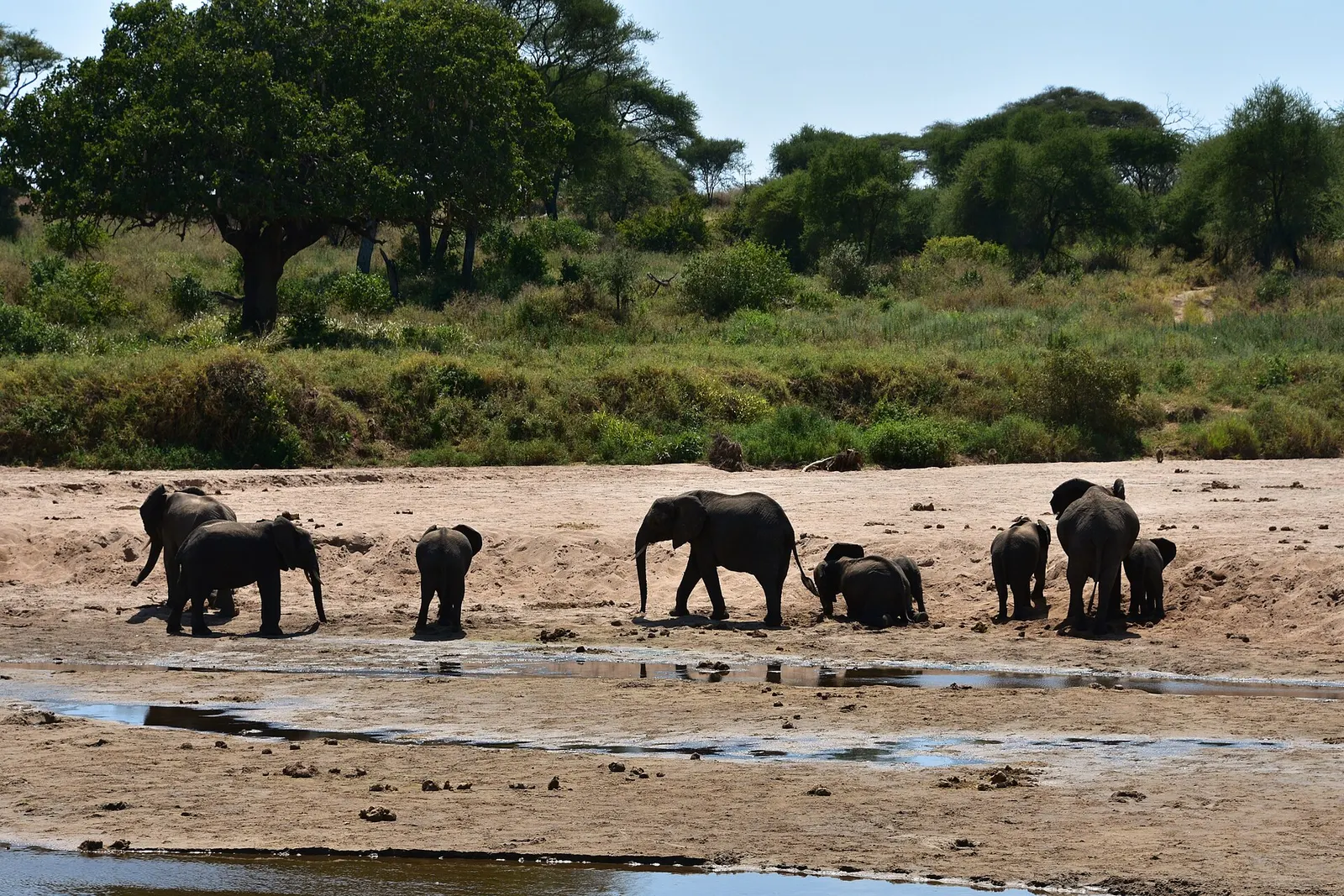
Walking Safaris in Tarangire: Reading Tracks and Signs on Foot
Plan a guided walking safari around Tarangire: how to read tracks, dung and bird alarm calls, what to wear, the best season and the rules that keep you safe.
How Altitude Works on Kilimanjaro: Pacing the Lemosho Route
A plain-English guide to altitude on Kilimanjaro: acclimatisation, altitude sickness, pole pole, climate zones and how the Lemosho route helps you pace the climb.