
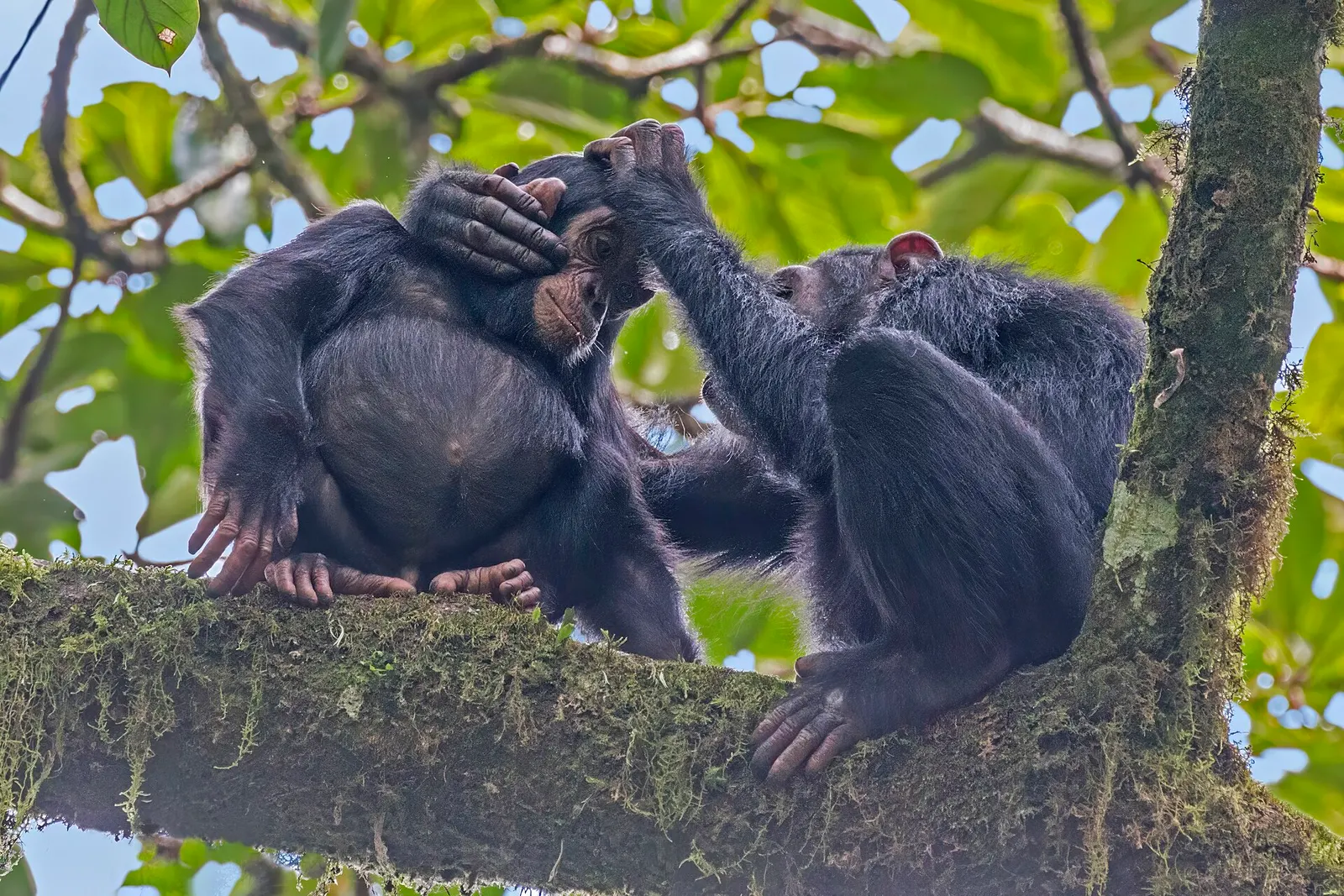

Gombe Stream National Park is one of the smallest national parks in Tanzania and one of the most significant in the world for the study of wild chimpanzees. It occupies a narrow strip of steep, forested valleys on the eastern shore of Lake Tanganyika, near the town of Kigoma in the far west of the country. There are no roads inside the park and no vehicles. Visitors arrive by boat, walk on foot, and spend their time in the forest looking for one of our closest living relatives.
This guide covers what chimpanzee trekking in Gombe is generally like: how to reach the park, what the forest and the lake offer, how the rules protect the apes, what to wear and carry, and when to go. Chimpanzees are wild animals that move freely through their territory, so nothing here should be read as a promise. Sightings are often excellent, but they depend on the day, the fruit in the trees and the choices the chimpanzees make.
Where Gombe is and how to get there
Gombe lies on the shore of Lake Tanganyika, around 16 kilometres north of Kigoma, a lakeside town that serves as the main gateway to western Tanzania. Most visitors reach Kigoma by scheduled flight from Dar es Salaam, Arusha or sometimes other airstrips, and the flight takes a couple of hours depending on the route and stops. Overland travel is possible but very long, which is why most itineraries use the air link and keep the road for those with plenty of time.
From Kigoma the journey continues by boat. Water taxis and lodge boats run north along the shoreline, and the trip generally takes somewhere between one and two hours depending on the craft and the weather on the lake. The boat journey is part of the experience: you pass fishing villages, small beaches, dugout canoes and the green wall of the hills rising straight from the water. The park has no road access, which is a large part of why it has remained so quiet.
Kigoma itself is worth a short look. The nearby town of Ujiji is historically known as the place where the explorer Henry Morton Stanley met David Livingstone in 1871, and the lake port has a relaxed, unhurried character very different from the northern safari towns.
A small park of steep, forested valleys
Gombe is compact, at around 35 square kilometres, but it is packed into a dramatic landscape. A series of parallel valleys runs from the rift escarpment down to the lake, each with its own stream. The slopes are steep, and the vegetation changes from open woodland on the ridges to dense evergreen forest in the valley bottoms, with palms and tall trees along the streams. The Gombe Stream, from which the park takes its name, flows to the lake from the hills.
This is the western arm of the East African Rift, and Lake Tanganyika is one of its great features. It is among the longest and deepest freshwater lakes in the world, shared by Tanzania and three neighbouring countries, and its clear water holds hundreds of species of fish, many of them found nowhere else. From viewpoints in the park, the lake and the hills of the opposite shore stretch away in the haze.
Jane Goodall and the history of the research
Gombe is closely associated with the research of Jane Goodall, who began studying the local chimpanzees in 1960. Her observations changed scientific understanding of chimpanzees, including the discovery that they make and use tools, hunt and eat meat, and form complex social relationships with long-lasting bonds. The research at Gombe has continued for more than six decades, and it is among the longest continuous studies of wild animals anywhere.
The park was formally gazetted as a national park in 1968. Today it is managed by the Tanzania National Parks authority, and the long-term research continues alongside tourism. The scientific work is a reason why the chimpanzees are so habituated, meaning they tolerate human presence calmly, and it is also why the rules for visitors are strict.
The chimpanzee communities
The chimpanzees of Gombe live in communities, groups of dozens of individuals that share and defend a territory. Within a community, chimpanzees form shifting parties that travel, feed and rest together, and the size of those parties changes through the day and through the seasons. Several communities have been recognised in and around the park over the years, and their ranges and numbers change over time.
It is not possible to know in advance which community you will see, or which individuals. Rangers and trackers follow the animals each morning and radio the location, and the trek is planned around where the chimpanzees are that day. Chimpanzees are fruit-eaters for the most part, so when fruiting trees are abundant they often feed high up in the canopy, and when fruit is scarce they may roam widely. Sightings are usually good, but a day with few views is possible.
What a chimpanzee trek is like
A trek begins with a short briefing from a ranger, who explains the rules and the route. Groups are small, and each group is led by a ranger who knows the forest trails and the habits of the animals. The walking is on narrow, often steep paths through humid forest, sometimes across streams and over exposed roots. The pace is gentle, but the slopes are a workout, and the heat and humidity add to the effort.
The distance covered varies widely. Some treks reach chimpanzees within an hour, while others take longer. On finding the apes, the group may sit on the ground or stand quietly while the chimpanzees feed, groom, rest or travel. Watching grooming, playing youngsters, display behaviour and the sounds of pant-hoots echoing through the valleys is the heart of the visit. Time with the chimpanzees is limited, and the group then returns along the trail.
Rules, distance and the protection of the apes
Because chimpanzees share about 98 per cent of their DNA with humans, they are vulnerable to human illnesses, including colds, flu and Covid-type infections, which can spread through a community and cause serious harm. For this reason, the park authorities set strict health rules. Anyone who is ill, even with a mild cold or cough, should not trek, and visitors may be required to wear a face mask when near the chimpanzees. The minimum age for trekking is generally around 15, though this is set by the authorities and can change.
The rules also limit how close visitors may approach. The minimum viewing distance is generally around 10 metres, and the time spent with the chimpanzees is normally limited to about an hour, although the exact figures are set by park authorities and can change. Rangers will ask you to keep your voice low, avoid pointing, avoid eating in view of the apes and never to touch them. If a chimpanzee approaches, you may be asked to step back and let the animal pass. Respecting these rules keeps both people and animals safe.
What to wear and carry
Light, long-sleeved clothing in neutral colours is best in the forest, partly for protection against scratches, sun and insects, and partly to avoid disturbing the animals. Trousers that tuck into socks help against ants. Sturdy hiking boots with good grip are important on the steep, sometimes muddy paths, and a walking stick, often provided at the start, can help on the slopes. A light waterproof jacket is wise at any time of year, because the forest can produce a sudden shower.
Carry a small daypack with plenty of drinking water, a hat, sunscreen, insect repellent, a camera and binoculars. A spare face mask and hand sanitiser are sensible. Leave bulky bags at the lodge, and avoid bringing food into the forest beyond what the rangers allow.
Photography without flash
Photography in Gombe is rewarding but challenging. The forest is dim, and the chimpanzees are often in shade. Flash is not permitted, as it can startle the animals, so a camera that performs well in low light is a real advantage, along with a fast lens and a high ISO setting. A modest zoom lens is usually enough, as the animals are watched at a respectful distance, but a long lens helps for those high in the canopy.
Put the camera down for part of the time. Some of the best moments come when you simply watch a chimpanzee mother carry her infant, or two adults groom each other in the quiet of the forest. A phone, a small camera or a pair of binoculars can all capture what you see.
Other wildlife, birds and the lake
Chimpanzees are the main attraction, but Gombe has more. Olive baboons live in the park in large troops and are often seen near the lakeshore, and they have also been the subject of long-term research. Red colobus monkeys, blue monkeys, red-tailed monkeys and vervet monkeys can be seen in the trees, and bushpigs, bushbuck and smaller mammals live in the undergrowth. The forest birds include palm-nut vultures, African fish eagles, hornbills, kingfishers and turacos, and the dawn chorus can be memorable.
The lake offers its own pleasures. Clear water and pebble beaches make swimming and snorkelling popular in the designated areas near the park's base, where you can see colourful cichlid fish, some of them found only in Lake Tanganyika. Ask your lodge or the rangers about where swimming is allowed and safe, as conditions and rules can vary. A quiet evening on the beach, with the sun going down over the water, is an easy way to end a day of trekking.
When to go and how long to stay
Gombe can be visited year-round, and chimpanzees can be seen in any month. The dry season, roughly May to October, is generally easier for trekking, because the trails are firmer and less slippery, the days are clearer and the boat trip is often calmer. The wet season, roughly November to April, brings heavy rain, particularly from March to May, and the steep paths can be slick, though the forest is lush and the park is quiet.
Plan on at least two nights, which allows a full day for trekking and an additional morning in case the first attempt has fewer sightings. Most visitors take two or three treks, often combined with a lake swim or a short hike to the Kakombe waterfall or to Jane's Peak, a viewpoint above the park. Fitness matters: you do not need to be an athlete, but a reasonable level of fitness will make the steep terrain far more enjoyable.
Combining Gombe with Mahale and ethics of primate tourism
Many travellers pair Gombe with the Mahale Mountains National Park, further south on the same lakeshore. Mahale is larger, wilder and more remote, with a different community of chimpanzees and a mountain backdrop, and it is reached by flight or by a long boat journey from Kigoma. Combining the two parks allows a longer, more varied western Tanzania journey, and both can be added to a northern or southern safari.
The ethics of primate tourism deserve some thought. Visiting chimpanzees helps fund conservation and gives local communities an economic reason to protect the forest, but only if it is done carefully. Choose operators that respect the rules, travel with a ranger, keep your distance, stay home if you are unwell, and never ask a guide to bend the rules for a better photograph. Responsible visitors help to keep the chimpanzees safe for future generations.
Planning your trip
A visit to Gombe takes a little more organisation than a standard safari, because flights, boat transfers and lodge space all need to line up. If you would like to explore a chimpanzee trek in Gombe, whether on its own or together with Mahale and a classic safari, get in touch with The Expedition Tours and we will talk through the options with you.
About The Expedition Tours
The Expedition Tours plans safaris, Kilimanjaro climbs and Zanzibar extensions from Arusha, Tanzania, built around each traveller.
See our routes →More Field Dispatches
All field notes →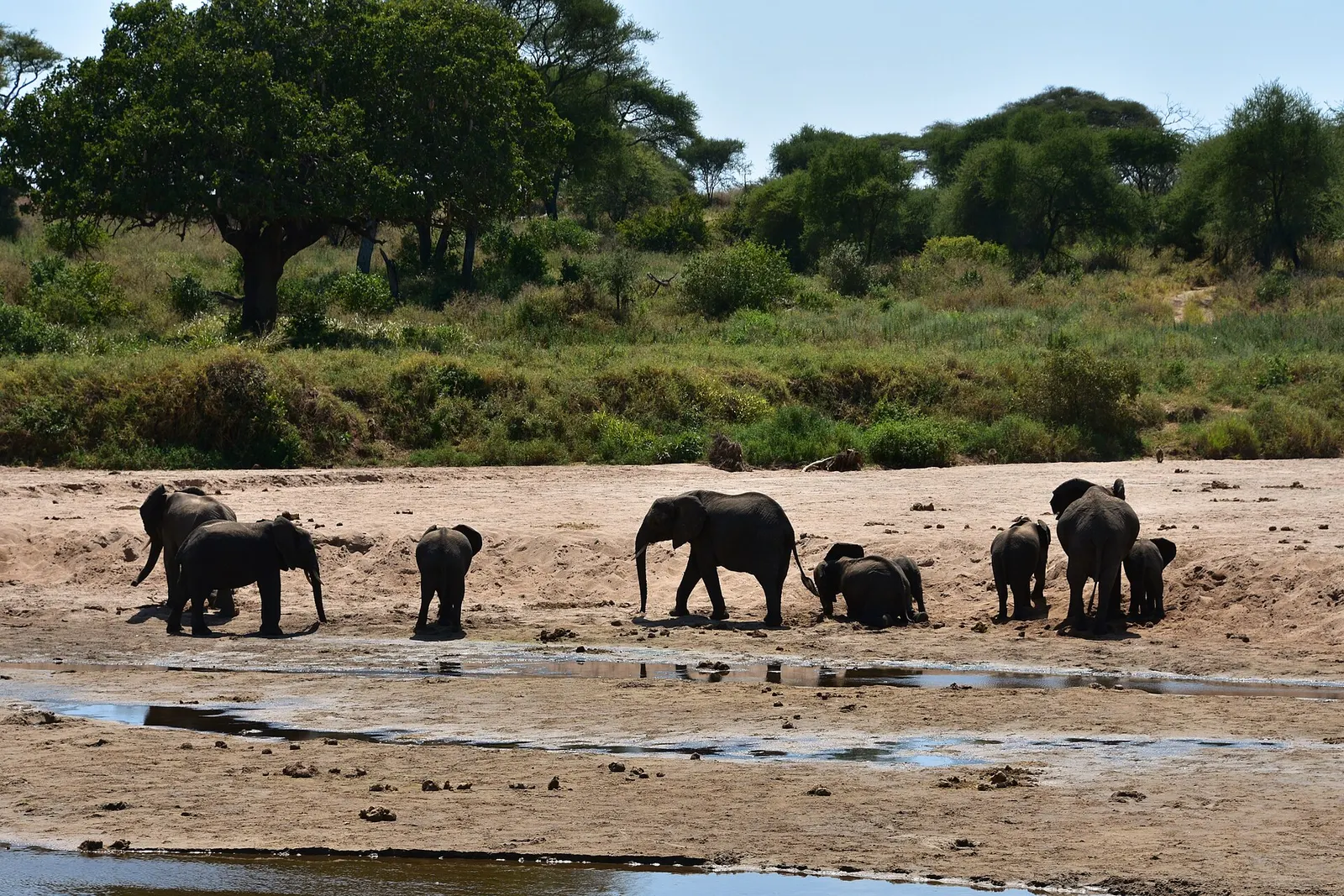
Walking Safaris in Tarangire: Reading Tracks and Signs on Foot
Plan a guided walking safari around Tarangire: how to read tracks, dung and bird alarm calls, what to wear, the best season and the rules that keep you safe.
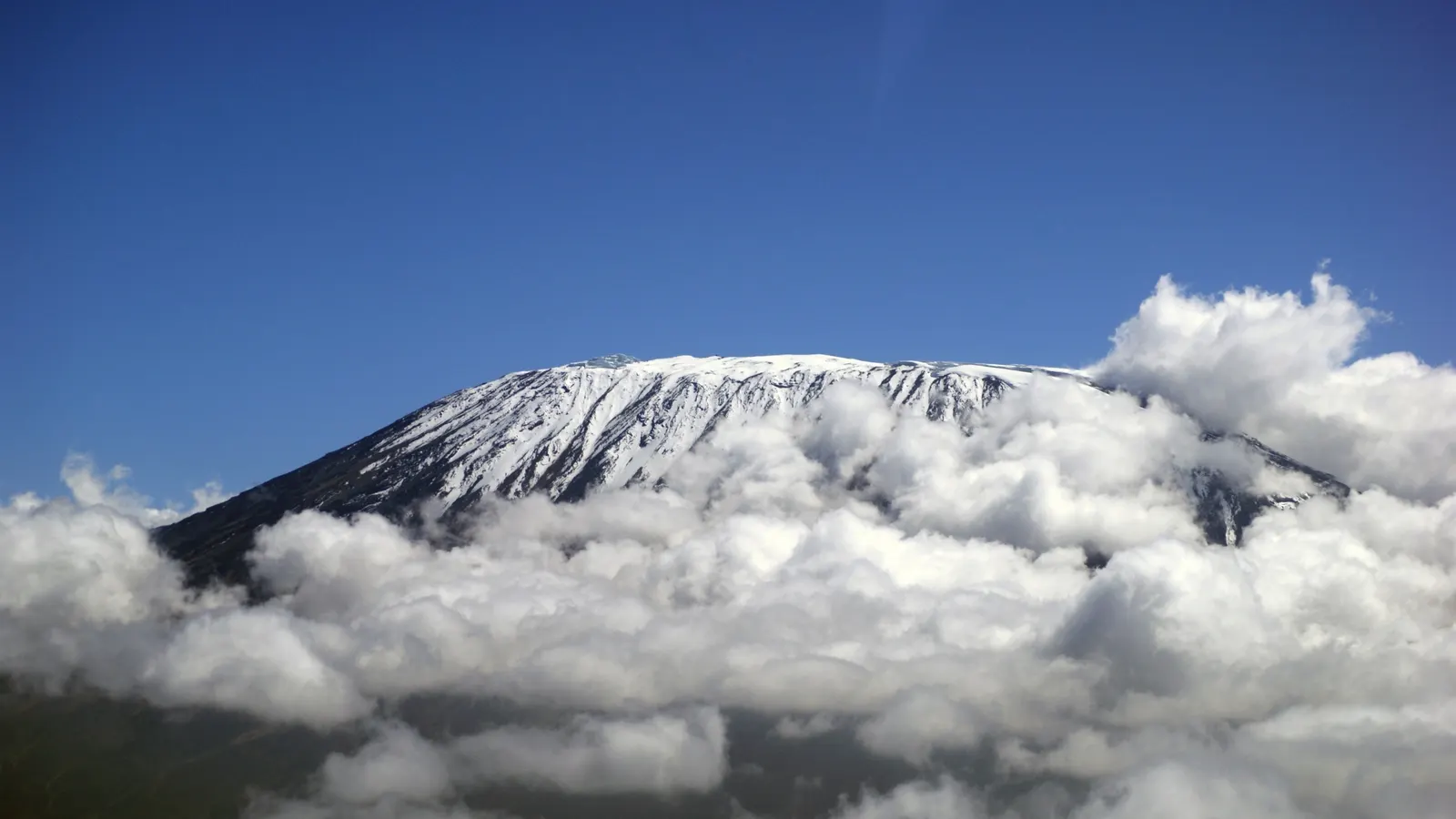
How Altitude Works on Kilimanjaro: Pacing the Lemosho Route
A plain-English guide to altitude on Kilimanjaro: acclimatisation, altitude sickness, pole pole, climate zones and how the Lemosho route helps you pace the climb.